About
What is autism & neurodiversity?
Autism is a lifelong difference in how a person experiences, processes, and responds to the world — in communication, sensory experience, attention, and social interaction. It’s a spectrum: no two autistic people are alike, and no list of traits describes everyone.
Neurodiversity is the broader idea: that variation in human minds — autism, ADHD, dyslexia, and more — is a natural part of human difference, not a defect to be corrected. It doesn’t deny that real, serious challenges come with these differences. It insists that the challenges don’t define the person, and that a great deal of the disability autistic people experience comes from environments built without them in mind.
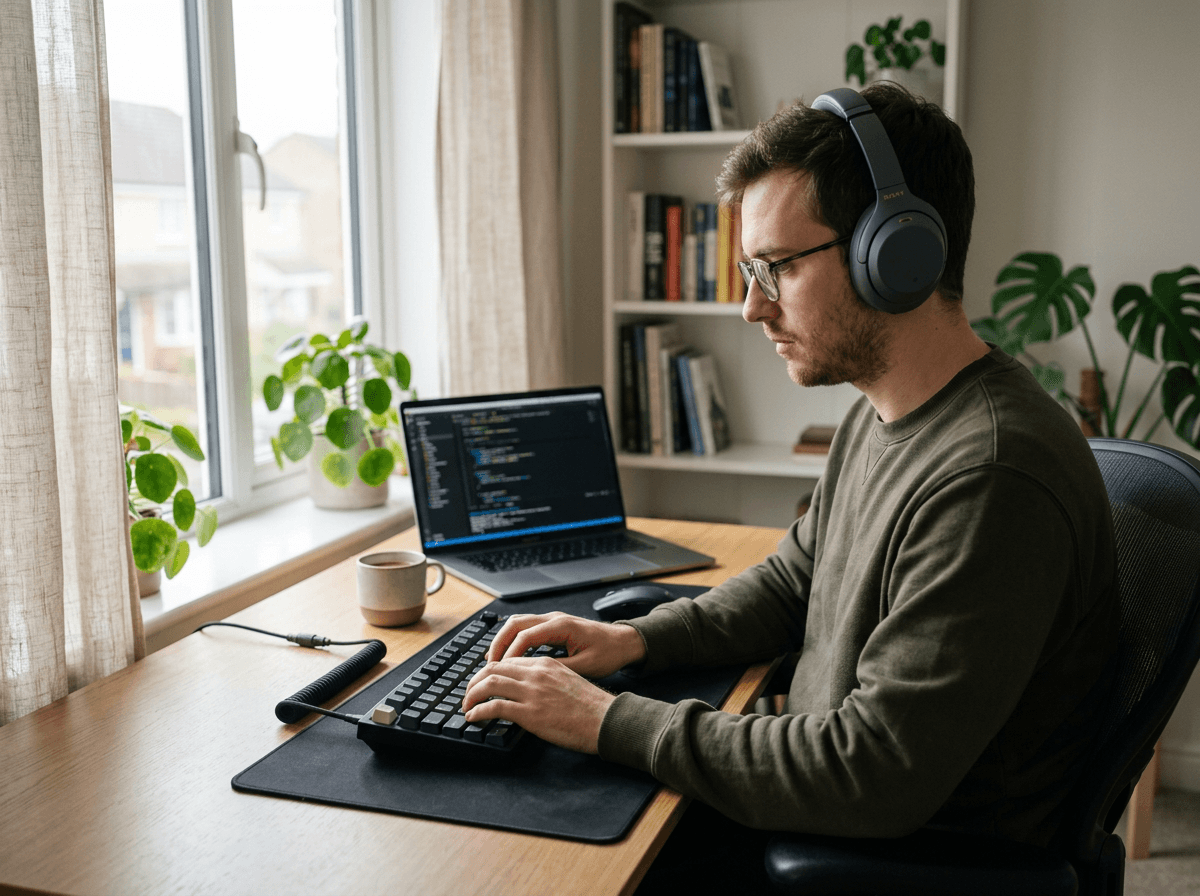
We hold two truths at once. First: many autistic adults bring real strengths — sustained focus, pattern recognition, deep honesty, comfort with structure — though not every autistic person has these, and no one should be typecast by them. Second: autism is not a superpower, and pretending it is erases people whose challenges are significant. The research is honest here too: a systematic review found only a handful of eligible workplace studies and no strong evidence for a general “workplace autism advantage.” What the evidence does show is that when environments, training, and expectations are designed well, autistic people succeed — and stay — at rates most programs would envy.
Strengths we design for — without typecasting
Sustained, deep focus
The ability to stay immersed in a task well past the point where most people's attention drifts — valuable for detail-heavy, quality-critical work.
Pattern recognition
Noticing structure, inconsistency, and anomaly in data, code, or process faster than a purely generalist approach would.
Directness and honesty
Low tolerance for ambiguity or unstated assumptions — an asset in QA, evaluation, and any role where precision matters more than politeness.
Comfort with structure and repetition
Some autistic adults thrive on clear, consistent process — though this is one profile among many, not a universal trait.
Real challenges we don’t talk around
Pretending these away helps no one. Naming them is the first step to designing around them instead of penalizing people for them.
Sensory sensitivity
Open-plan offices, fluorescent lighting, and unpredictable noise can be genuinely disabling, not a preference to be talked out of.
Communication mismatch
Literal interpretation, difficulty with small talk, or atypical eye contact are often misread as disinterest or defiance rather than difference.
Executive function load
Task-switching, time estimation, and multi-step planning can take more conscious effort — even when the underlying capability is strong.
The interview problem
Standard interviews measure social performance under pressure, not job capability — screening out qualified candidates before they get a chance to show their work.
1 in 31 U.S. 8-year-olds is identified with autism. They are all future adults. Building a world of work and independence that actually fits them isn’t charity — it’s overdue infrastructure.
Source: CDC ADDM Network, MMWR, April 2025 (2022 surveillance year)